 GET QUOTE
 NEWSLETTER
 LOGIN

Get more output from your production line
BY MAURITS WEGHORST
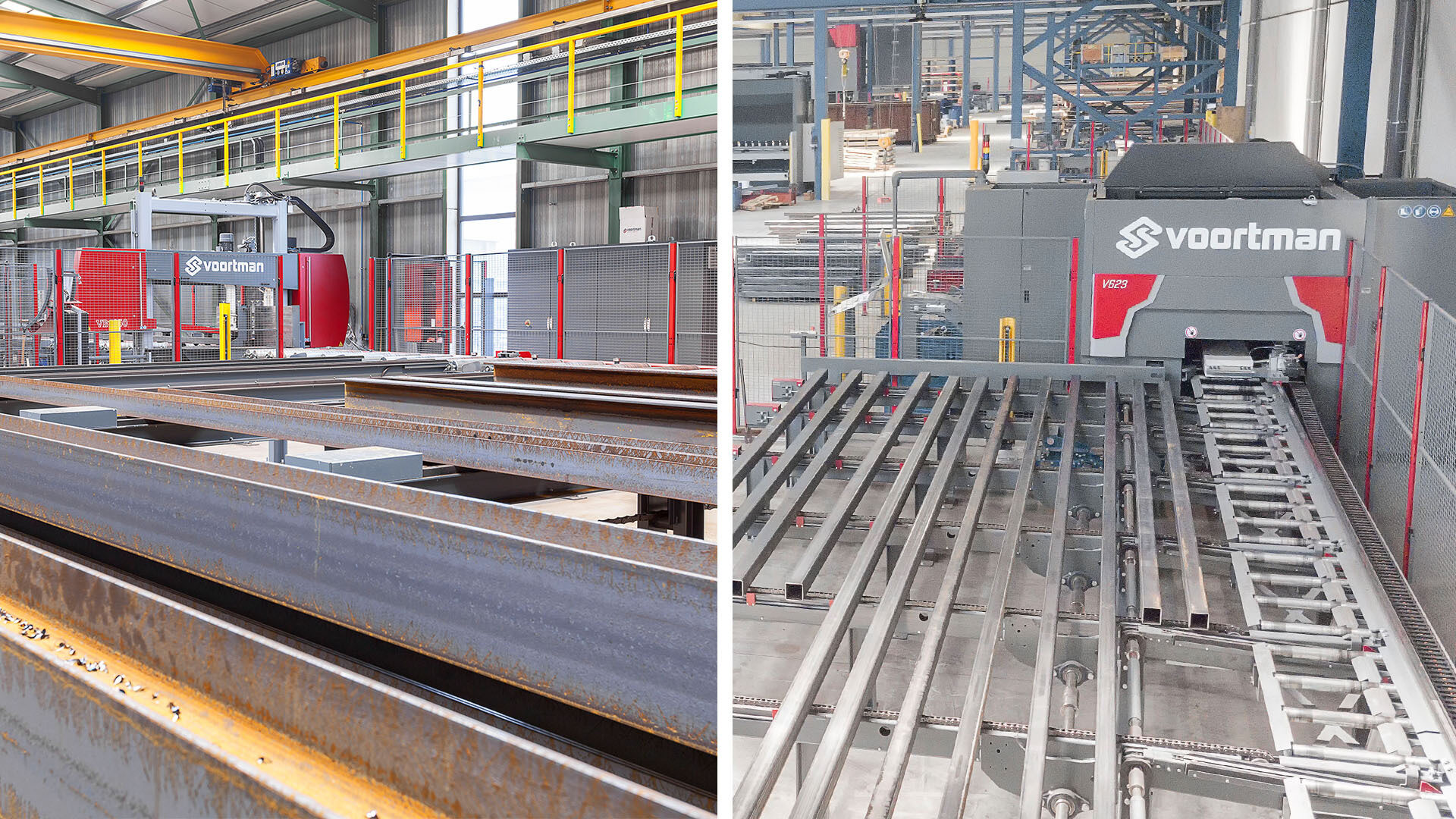
As a steel fabricator, you want to maximize the output of your production line. Small angle sections, tubes, and U-profiles take a relatively long time to produce. As a result, your primary production line is less available for the larger profiles, where you process more tonnage and generate higher margins.
With low margins, high labor costs, and constant pressure to increase production, every minute counts. The question is not only how fast your machines can produce, but more importantly: are you using your production line capacity for the right work?
Small parts, big impact on capacity
For many of our steel fabrication customers, the primary production line consists of a drill-saw combination in a back-to-back or split setup. In other cases, a V807 handles larger profile processing. On these same production lines, smaller angle sections, tubes, and U-channels with dimensions up to 150 mm (6”) are often processed as well.
These smaller parts contribute little to your daily tonnage but can consume a significant share of available production time. The combination of multiple processing steps, material handling, and manual labor often ties up capacity that could be used for higher-value work.
In practice, we see that approximately one-quarter of available labor is spent on work that represents only around 2-5% of daily tonnage. But what happens to your overall output when you remove this work from your primary production line?
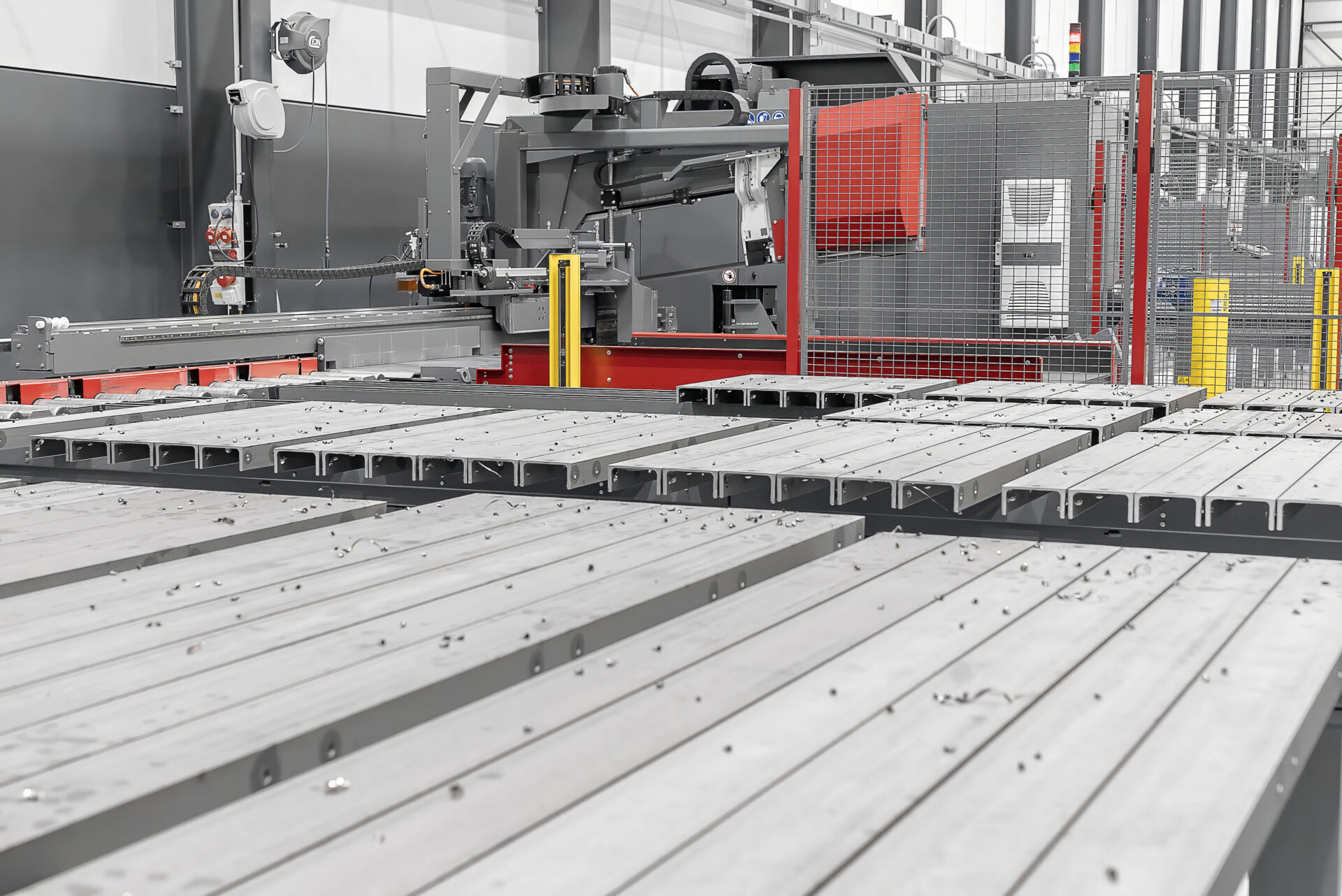

It's not just processing, handling takes time too
The optimization potential extends beyond processing time alone.
Smaller profiles often exhibit more material deviations than larger, structurally rigid profiles. A profile may be slightly bent or banana-shaped, for example, which can complicate automated material handling.
A gripper may struggle to securely pick up the material. Likewise, an irregular profile may be more difficult to transport automatically via a roller conveyor. The result: more manual intervention, greater operator involvement, and disruptions to the production flow.
As a result, smaller workpieces not only consume valuable capacity on your primary production line but can also slow down the flow around the machine.
Optimization doesn't necessarily mean replacement
Creating additional capacity does not mean you need to replace your existing machines or redesign your entire production line. Instead, take a closer look at how work is distributed between your machines.
By adding a complementary machine alongside your existing primary production line, you can process smaller, more labor-intensive work separately. This frees up your primary production line to focus on the larger profiles where it delivers the greatest value.
Simply put:
- Small, complex work → Complementary machine
- Large profiles and tonnage → primary production line
This approach optimizes not only the productivity of individual machines but also the output of your entire production process.
Two ways to complement your production line
- V623: flexible drilling, milling and sawing
The V623 drills, mills, and saws a wide range of profiles, while its innovative gripper truck enables automatic loading with virtually no clamping limitations. This means that flat bars can also be processed without any problems. Built for continuous, unmanned production with a compact design. - V845: flexibility with laser technology
The V845 profile laser handles everything from tubes and pipes to heavy H/I profiles, combining flexible laser cutting with automated material handling for a smooth, efficient production flow.
Which Machine Is Right for You?
A key advantage of the V623 is its versatility. It can automatically process flat bars too. With the V845, laser technology provides high speed, exceptional precision, and significant freedom in cutting geometries. In addition, it can process round tubes, making it an attractive option if your product mix extends beyond traditional structural steel profiles.
What can you gain?
Are you a medium to large steel fabricator? Then a complementary V623 or V845 could be an effective way to unlock capacity, increase output, and accelerate your return on investment.
By removing smaller, labor-intensive work from your primary production line, you can:
- Free up more primary production line capacity for larger profiles
- Increase overall productivity and process more tonnage
- Reduce unnecessary downtime and interruptions
- Allow operators to focus on higher-value activities
- Schedule different types of work more flexibly
- Improve material flow by processing products on the most suitable machine
What does your optimal production line look like?
Discover what it could mean for your operation if you moved work up to 150 mm (6”). off your primary production line. Share your production challenges or business situation with our experts and identify where additional capacity and profitability can be gained.