 GET QUOTE
 NEWSLETTER
 LOGIN
LOGIN

WHAT'S THE REAL COST OF AUTOMATED WELDING VS. HIRING WELDERS?
BY TJAARD BUREMA,
PRODUCT MANAGER AT VOORTMAN
PUBLISHED: SEPTEMBER 7, 2026
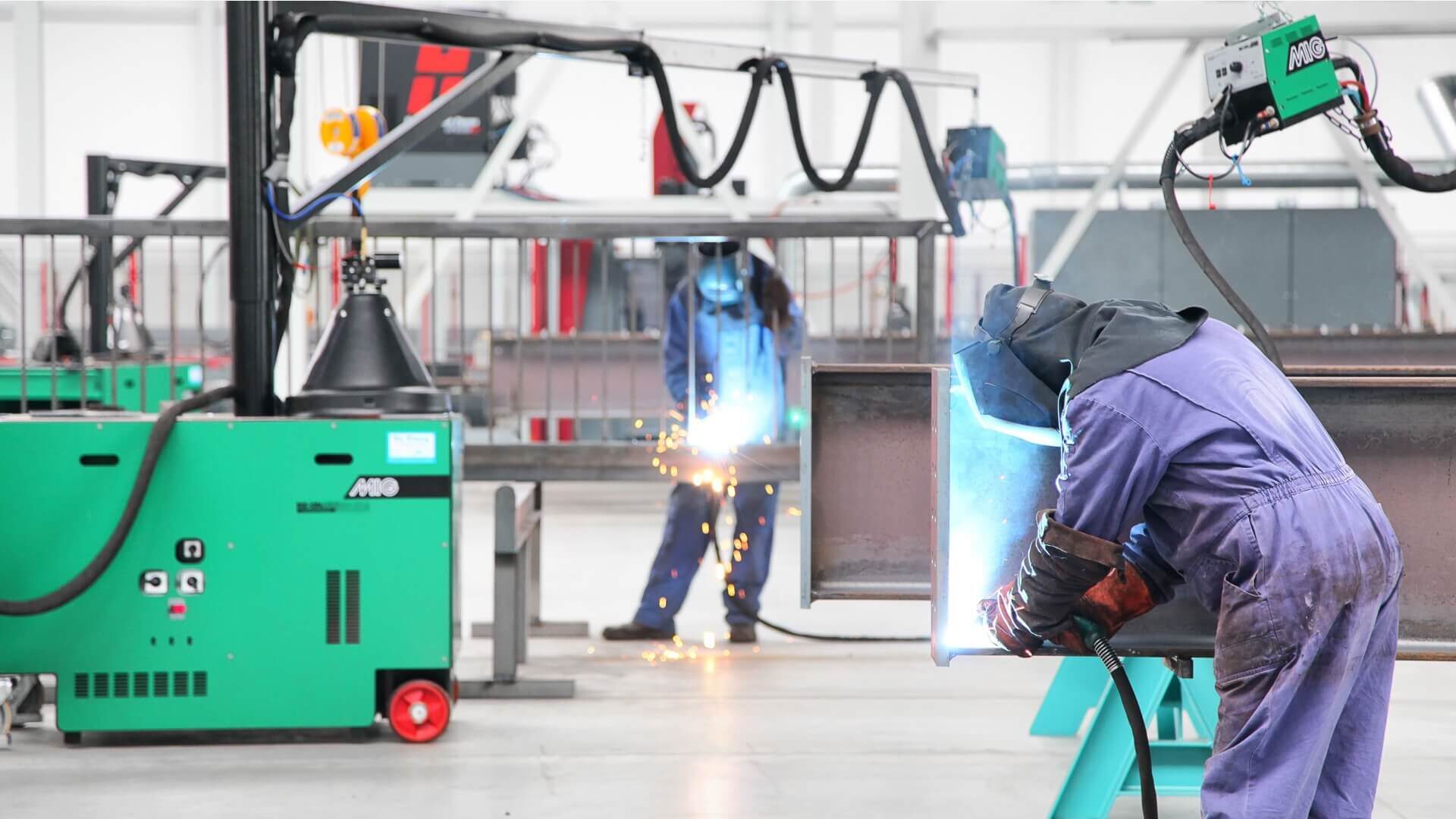
Steel fabricators facing growing workloads or struggling to find and retain skilled welders often arrive at the same question: Should we hire more welders or invest in automated fitting and welding?
The answer is rarely about speed alone. The real business case depends on aspects like labor availability, production volume, and long-term scalability. In this article, we provide insights to help you evaluate both options.
The traditional solution: Hire more welders
When demand increases, many fabricators naturally look to expand their workforce. On paper, the logic is simple; more projects require more welding hours. More welding hours require more welders. More welders increase production capacity.
However, production capacity is not determined by welding alone. Welders spend significant time measuring, positioning, fitting, handling, rotating, and moving assemblies before welding can begin. As a result, hiring more welders does not necessarily lead to comparable increases in output.
There are two types of costs to consider:
- Direct costs in manual welding include welder salary and benefits, recruitment costs as well as training and onboarding.
- Indirect costs in manual welding are driven by factors such as absenteeism and employee turnover, labor shortages, production variability or rework and quality issues.
The key question becomes: Can you reliably find and retain enough skilled welders to support future growth?
Continue reading below the image ↓
The alternative: Automate fitting and welding
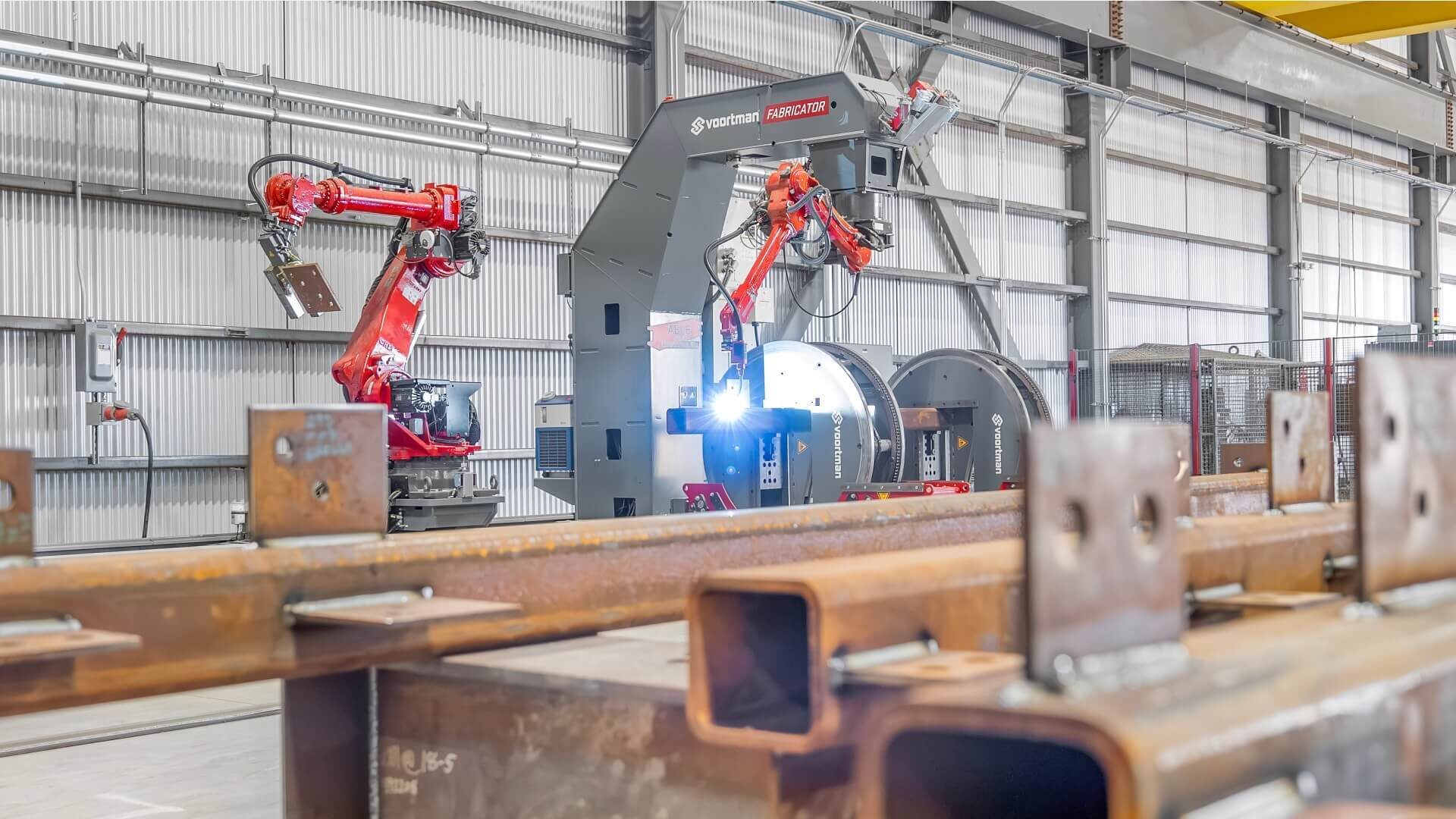
Automated fitting and welding systems combine several production steps into a single process. These systems automate the entire process from work preparation to finished assembly. Based on the digital model, the system automatically measures, fits, (re)positions, and welds the components, replacing the manual execution of these tasks.
This changes the economics of production. Rather than paying for additional labor capacity every year, fabricators invest in equipment that delivers capacity throughout its service life.
The key question becomes: Do you have the right volume and type of fitting and welding work to make automation a worthwhile investment?


Wondering whether manual or automated fitting and welding makes the most sense for your business?
At Voortman, we use real production data and industry expertise to determine the most cost-effective solution for your specific situation. By comparing your assemblies and your current manual welding capabilities, we provide a clear, fact-based assessment of the potential impact of automation.
Building the business case
Let’s dive into 5 key factors that influence the choice for automated welding or hiring more welders:
1. Labor optimization
A manual process may require two fitters, two welders, and one material handler, whereas an automated process can often be operated by a single person. However, for many steel fabricators, the strongest business case for automation is not labor reduction, but labor optimization.
Automation enables companies to increase production capacity without relying on additional skilled welders, who are often difficult to find. By automating repetitive fitting and welding tasks, experienced welders can focus on more complex, high-value work where their expertise has the greatest impact.
The capacity gains extend beyond labor allocation alone. In manual production environments, compensating for gaps and fit-up variations often results in oversized welds to ensure quality. While effective, this can significantly increase production costs. For example, increasing a weld size from 3/16" to 1/4" (A5 to A6) raises the required weld volume by nearly 80%. In some cases, it may also require moving from a single-pass weld to a three-pass weld, tripling welding time.
Automated fitting and welding systems help eliminate these variations through precise fabrication and consistent process control. As a result, less welding material is required, welding time is reduced, and quality becomes more predictable.
The same consistency also reduces the need for intermediate quality inspections between assembly and welding. Depending on the production process, this can save between 10 and 20 minutes per beam. For a fabricator processing 20 beams per day, that translates into approximately 3.5 to 6.5 hours saved daily. Beyond the direct labor savings, removing these bottlenecks improves throughput, reduces work in progress, and increases overall factory output.
Fineline Steel Fabrication is a good example. After investing in the Fabricator for automated fitting and welding, the company significantly increased its productivity:
“We're usually getting six to eight columns for every one that we would on a manual station.”
Importantly, the objective was not to replace employees:
“The goal was to create more capacity and let our people focus on the work where their skill matters most.”
2. Production capacity
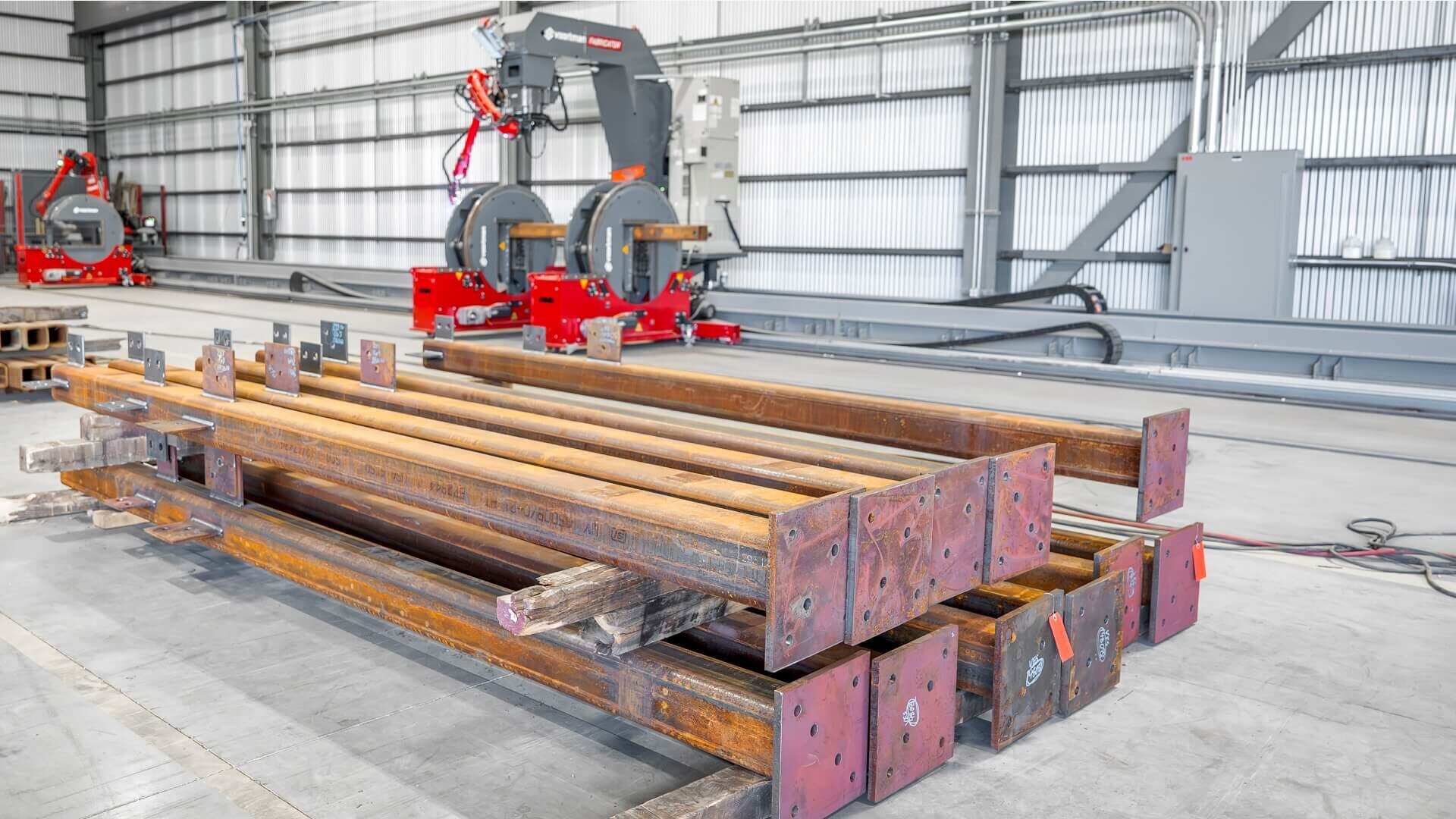
The business impact is often greater than labor savings alone. Imagine a welder producing 100 assemblies per month. If automation reduces fabrication time significantly, the shop may be able to produce more assemblies with the same workforce. It can result in shorter lead times, increased revenue potential and higher delivery reliability.
Voortman case studies report total fabrication time reductions of between 68% and 78% for common assemblies. At Able Steel Fabricators, automated fitting and welding with the Fabricator reduced fabrication time by 50%. This enabled the company to increase its annual production capacity from 4,000-5,000 tons to 10,000 tons of steel, effectively doubling output without doubling its workforce.
More on production time comparisons >>
3. Quality and rework
Manual welding quality depends heavily on operator skill, consistency, and working conditions.
Automation can provide:
- Repeatable fitting accuracy
- Consistent weld quality
- Fewer measurement errors
- Reliable results without the need for re-measuring
- Reduced rework with deviations automatically detected and corrected
Even small reductions in rework can have a significant impact on profitability.
When fabrication errors require return transport, rework, re-galvanizing, or recoating, costs can quickly add up, typically ranging from €500 to €3,000 ($575 to $3,450) per assembly. In the worst-case scenario, project delays can trigger penalty costs of €5,000 to €30,000 ($5,750 to $34,500) per day, significantly impacting project profitability.
4. Scalability and business growth
An automated welding system saves time and labor. You can use that freed-up capacity to grow revenue and profits. As workloads increase, the machine can run additional hours, making it easier to accept more orders and larger projects without relying on overtime or additional hires. When demand slows, machine hours can be reduced without the need to downsize the workforce.
To grow through hiring, you may need additional welders, fitters, training and supervision. While growing through automation requires only improved machine utilization, more production planning and your current operators. Especially for fabricators in regions with labor shortages, this can be the reason to automate the fitting and welding process.
Another advantage is that employees freed up by the Fabricator can be redeployed to higher-value work. Instead of spending time on repetitive fitting and welding tasks, skilled welders can contribute to more complex projects with higher margins. Even small improvements in project margins can have a substantial financial impact. For example, on an annual production volume of 700,000 metric tons, increasing the margin from 5.5% to 6.5% at a value of €5 per ton would generate an additional €35,000 in profit per year.
5. Total cost of ownership
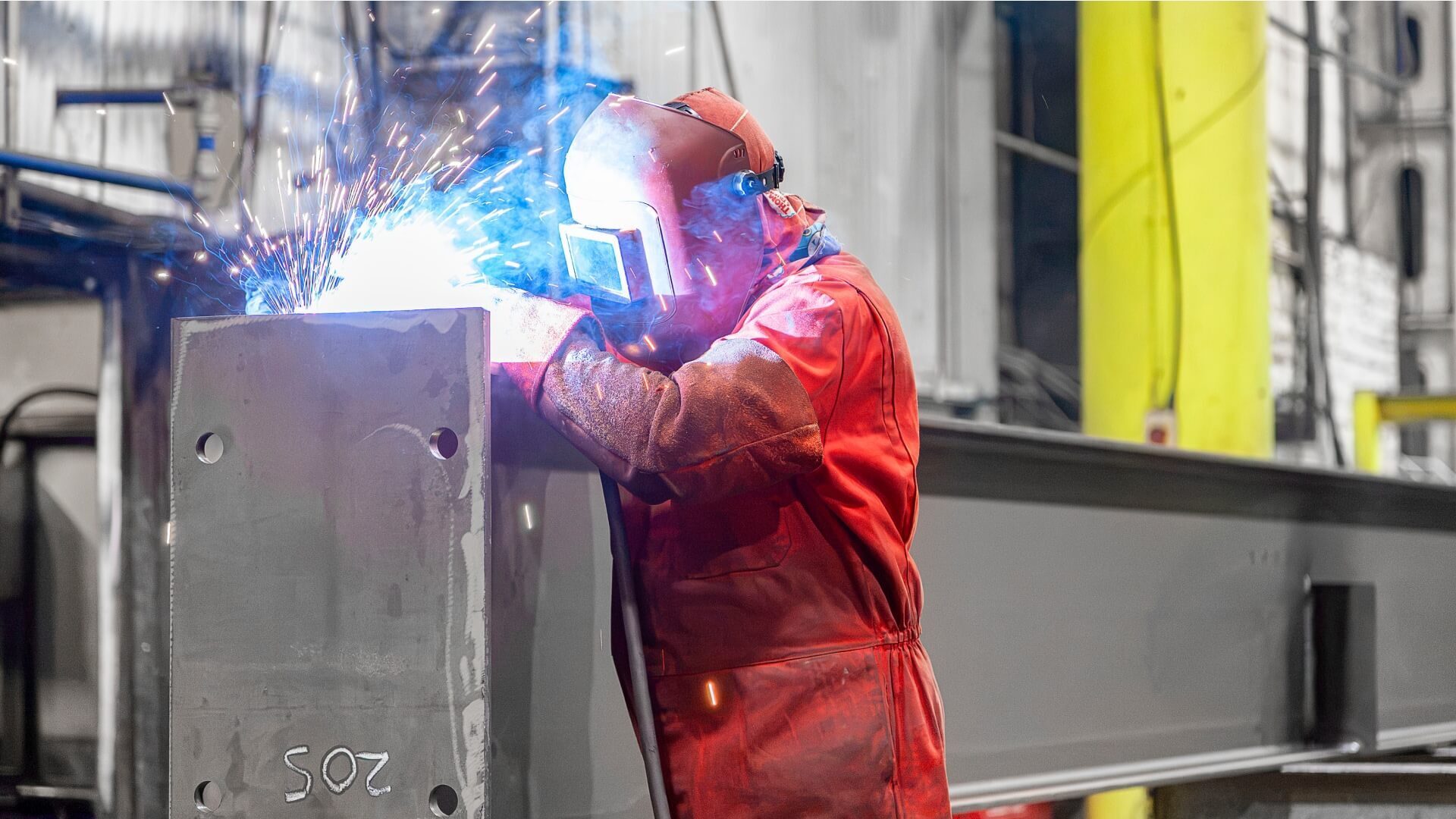
The purchase price of an automated fitting and welding system is only one part of the equation. A complete business case should evaluate the total cost of ownership (TCO) and compare it against the long-term financial benefits.
Key costs include:
- Investment costs, such as machine purchase, installation, training, and potential facility modifications.
- Operational costs, including maintenance, consumables, energy usage, software licenses, and operator costs.
The benefits can be equally significant. Automated fitting and welding can reduce dependence on scarce skilled welders, simplify production flows, improve quality consistency, and increase throughput. As a result, fabricators are often able to produce more with the same workforce while reducing the costs associated with manual processes.
Calculating the true return on investment (ROI) can be challenging, as it requires balancing multiple variables. Typical inputs include the total investment cost, annual production hours, financing or interest rates, software license fees, operator labor rates, and expected yearly production savings. Together, these factors determine how quickly the investment pays back and the long-term value it generates.
To help manufacturers make an informed decision, Voortman can perform a detailed ROI analysis based on their specific production environment. By combining production data with financial assumptions, fabricators gain a realistic understanding of the expected payback period, annual savings, and long-term return before making an investment decision.
While the initial investment may seem substantial, the key question is not what the machine costs today, but how much value it will create over its lifetime. For many fabricators, the increased capacity, labor optimization, and operational efficiencies outweigh the upfront investment, resulting in a strong long-term business case.
Conclusion: what’s the most economical solution?
The real comparison is not machine versus welder. It is capacity investment versus labor investment.
Hiring welders increases capacity one person at a time and introduces ongoing labor costs. Automated fitting and welding increases capacity through technology, reducing dependence on scarce skilled labor while improving consistency and throughput. So, when answering the question Should you hire more welders or invest in automated fitting and welding? For most growing steel fabricators, the answer depends on the following considerations:
Hiring more welders makes sense when:
- Production volume is low.
- Assemblies are highly customized.
- Most welds are simple and short.
- Future growth is uncertain.
- Skilled labor is readily available.
Automation becomes compelling when:
- Welders are difficult to recruit.
- Production volumes are growing.
- Lead times are under pressure.
- Most welds are either simple and very short or highly complex with difficult weld preparations.
- Quality consistency is critical.
- Management wants to scale without proportionally increasing headcount.
Curious when automated fitting and welding pays off?
Let us calculate the most economical solution for your specific situation.